Reality-Based Self-Defense vs. Martial Arts vs. Boxing: The Crucial Differences
"Self-defense" is often used as an umbrella term in the fitness and martial arts communities, encompassing everything from boxing gyms to karate schools and MMA facilities. While striking, footwork, and conditioning from any combat discipline can indeed enhance your ability to withstand harm, there's a significant and meaningful distinction between training in a martial art or combat sport and engaging in Reality-Based Self-Defense (RBSD).
Understanding these differences is vital if you're deciding where to invest your time and effort.
Rules Redefine Everything
Every martial art and combat sport, including boxing, kickboxing, Muay Thai, Brazilian Jiu-Jitsu, and karate, operates within a defined set of rules. Techniques are adapted to these regulations; for example, most boxing styles prohibit grappling, while many grappling styles disallow striking. Movements are typically designed for one-on-one encounters, and certain techniques are banned for safety reasons. Critically, multiple opponents are never a factor in competitive combat sports.
In contrast, Reality-Based Self-Defense discards this structured approach. It is not designed for competition, scoring, or an opponent who adheres to the same rules. RBSD systems are not considered hobbies or sports and do not participate in tournaments. Every technique taught must be purely utilitarian, devoid of ceremony or tradition. The ultimate objective is not a victory on a scorecard, but rather ensuring you can return home safely.
Beyond physical techniques, RBSD training incorporates a crucial layer of psychological and tactical understanding of real-world situations, systematically analyzing and training for the most common scenarios.
The Gap Highlighted by Competitive Outcomes
Boxing, for instance, is a highly respected striking discipline, and for good reason. However, its training is inherently geared towards the ring. The sport employs a focused and refined set of tools: the jab, cross, hook, and uppercut. Boxers dedicate extensive time to honing these skills on mitts and heavy bags, which is why their offensive capabilities translate well to street encounters. Essential skills like footwork, distance management, and head movement are genuinely valuable regardless of where a confrontation occurs.
The complexities arise when considering what boxing and similar sports *don't* train for. Kickboxing, boxing, and UFC are structured around weight classes, timed rounds, protective gloves, and rules that limit strikes to specific areas, clinch work, and ground fighting. None of these elements are present in a real assault. The reality of a street confrontation involves no hand wraps, padded gloves, or referees. Furthermore, such situations can involve multiple attackers, weapons, or unpredictable terrain. This is why sport-specific training and street-ready training are fundamentally different categories, even when the punches appear identical.
Reality Self-Defense Prepares for Chaos, Not Competition
Reality-based programs are founded on a different premise: your attacker will not abide by a rulebook. Sport martial arts train for competition against a skilled opponent following agreed-upon rules. Conversely, self-defense training must prepare you for an unpredictable attack from someone who may be untrained but dangerous. The encounter might occur with no warning, in poor lighting, or on uneven ground. This fundamental difference shapes every aspect of the training, including drills, the training environment, stress levels, and even the clothing worn.
Consequently, a legitimate reality self-defense program must extend beyond mere physical techniques. Discussions about real self-defense inevitably touch upon the legal aspects of using force. This is because the level of force employed must be proportionate to the threat faced. Excessive force can legally transform a victim into an aggressor, a concept not typically addressed in boxing classes or sparring sessions, and often overlooked in many self-defense programs.
A Necessary Word of Caution
It's important to state clearly: not everything marketed as "reality-based" truly lives up to that claim. Critics within the martial arts community have noted that some RBSD programs are still derived from traditional martial arts techniques. The founders of every reality-based system drew their knowledge from a conventional martial arts foundation, so the label alone is not a guarantee of effectiveness. The true differentiator lies not in the name of the establishment, but in whether the program genuinely trains you under stress, against uncooperative resistance, and with scenarios that mirror real-world situations outside the gym—a stark contrast to the controlled environment of a ring.
Where This Leaves You
None of this renders boxing, kickboxing, or traditional martial arts useless for self-protection; quite the opposite. The conditioning, reflexes, ability to maintain composure under duress, and fundamental understanding of distance and power can all be transferred and applied in a self-defense situation. However, if your primary objective is to prepare for a worst-case, no-rules scenario, you require training specifically designed for that context. You cannot simply assume that ring skills will automatically translate to street survival.
Your specific situation will dictate your tactics. There's no easy way to escape a dangerous situation, but you can equip yourself by training your mind and body to react decisively against force or threats. This is the essence of reality-based self-defense.
Fresh materials — Combat Sports News

Stylish New Scottish Highlands Retreat: A Tribute to Nature
The allure of the Scottish Highlands, much like many British traditions, has historical ties to the monarchy. In the harsh winter of 1848, Queen Victoria and Prince Albert, captivated by the "wild loveliness" of Aberdeenshire, secured a lease on Balmoral. This event propelled the remot

Girlhood Flourishes at Olivia Rodrigo's Daisy Chain Festival
Within moments of arriving at Daisy Chain Fields, the festival's spirit was palpable. Thousands of attendees gathered, creating an electrifying atmosphere despite the sweltering heat exceeding 103 degrees. The festival's inherently positive nature, coupled with its charitable m
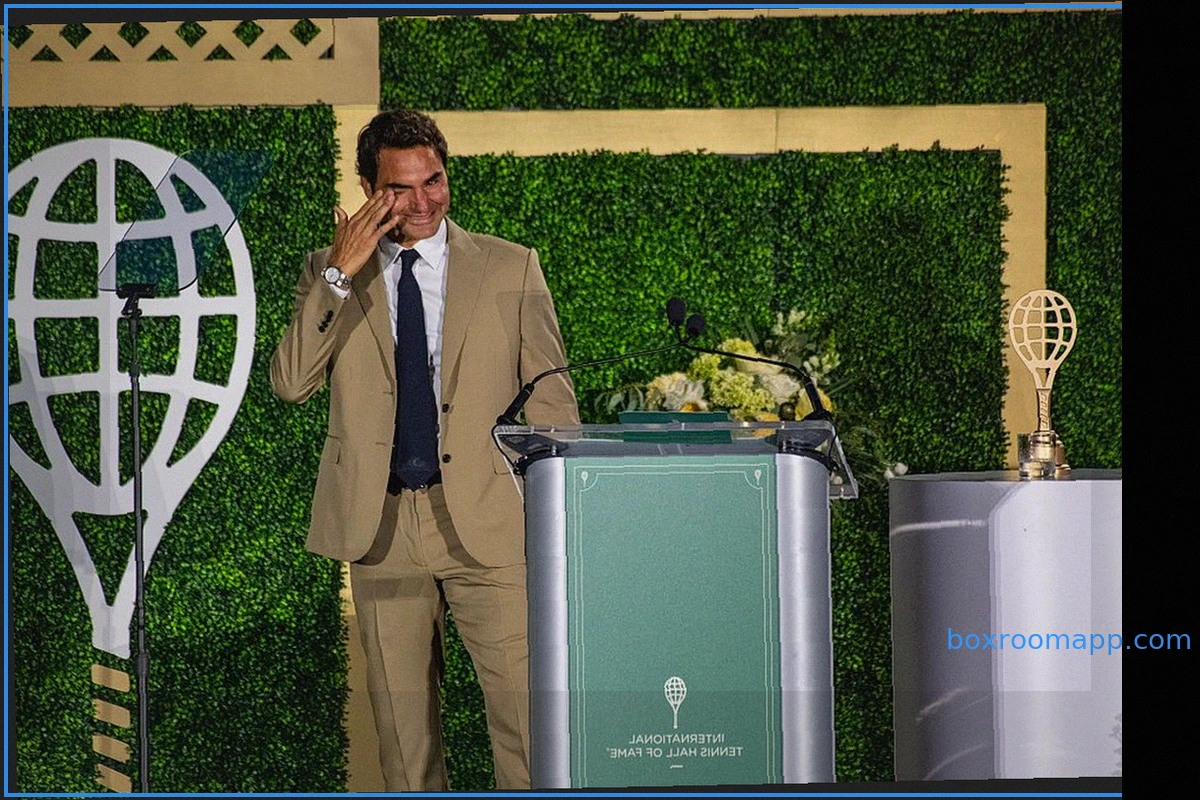
Roger Federer's Induction into the International Tennis Hall of Fame in Newport
The induction of Roger Federer into the International Tennis Hall of Fame (ITHF) in Newport, Rhode Island, was a highly anticipated event, marked by significant fanfare and emotion. Federer, alongside former professional player and broadcaster Mary Carillo, was recognized for his unpa
Stars Showcase a Spectrum of Style: From Sleek Minimalism to Theatrical Maximalism
As August draws to a close, many stars are still holding onto the spirit of summer. This week, the fashion landscape was a fascinating blend of opposing styles, with celebrities divided between understated minimalism and bold, theatrical maximalism. On the minimalist side, mod

Chappell Roan Embodies Her Truest Self as Bob-ell Roan
Chappell Roan's go-to makeup artist, Dee Carrion, is responsible for her captivating looks, having also styled fellow performer Doechii. Carrion masterfully applied a soft purple blush, emphasizing Roan's features and deepening towards her spiky-lashed, sharply defined eyes and temples

Claudia Sulewski and Finneas Tie the Knot! A Glimpse Inside the Bride's Oscar de la Renta Final Fitting
The moment has arrived to unveil Claudia's dazzling after-party ensemble, inspired by Oscar de la Renta's vibrant early 2000s collection, famously showcased by models like Gisele Bündchen. "The boat neck felt so fresh and different to the rest of the looks—and we made it pink!" Claudia