

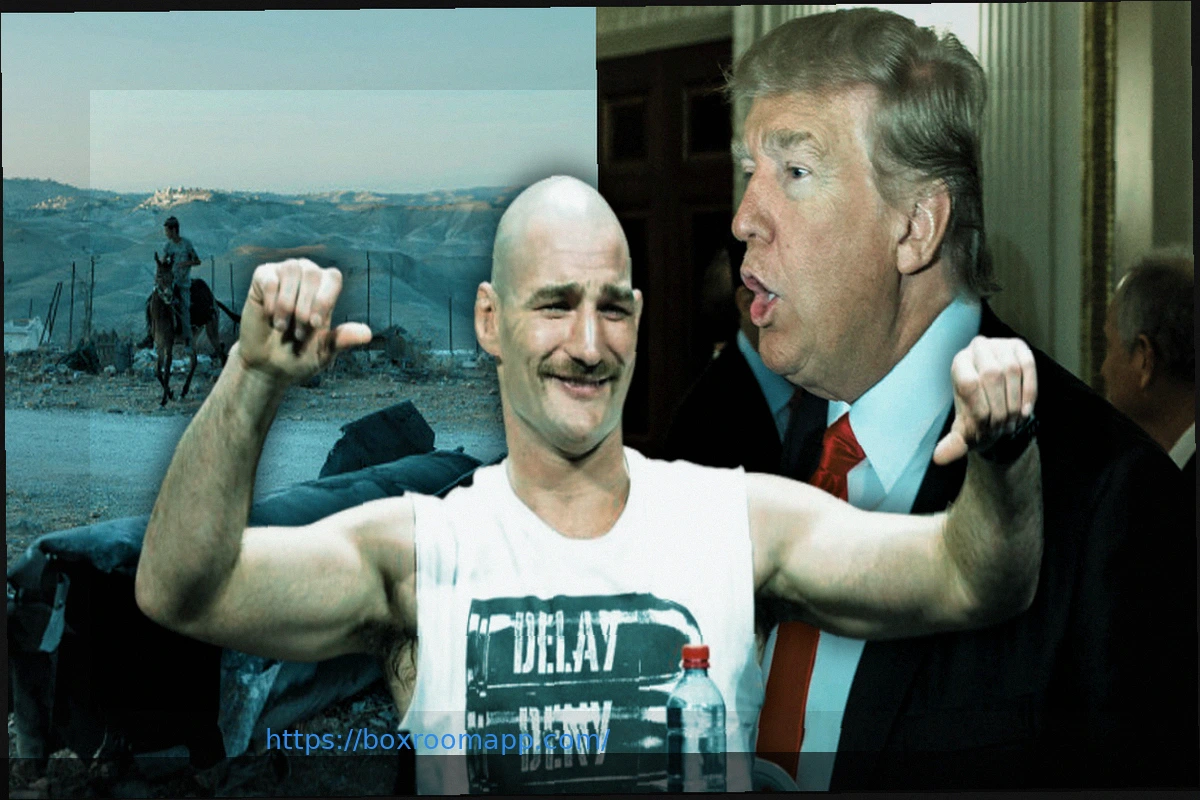
Sean Strickland, a former UFC middleweight champion, has leveraged his social media presence on X to consistently denounce President Donald Trump’s approach to the conflict with Iran. Strickland characterizes this policy as detrimental to working-class Americans and a dangerous path toward widespread escalation. His commentary resonates with public concerns about an ongoing conflict that has destabilized energy markets, fueled inflation, and brought Washington and Tehran to a perilous nuclear impasse.
Strickland’s Critique of Donald Trump’s Iran Policy
Strickland’s critique transcends mere spontaneous outbursts, presenting a coherent populist argument against the war’s justification and its financial burden. In one post, he controversially asserted that “the only way Trump will get his way in Iran is if he puts a bullet in the head of every Iranian.” He then enumerated U.S. demands—such as Tehran ceasing missile development, ending support for proxy groups, and halting uranium enrichment—which reflect long-held American and Israeli security concerns regarding Iran’s military and nuclear ambitions. Strickland questioned the ultimate objective of this campaign, asking, “At this point what are you trying to accomplish?”, especially given the extensive strikes already conducted on Iranian nuclear and military facilities.
Elsewhere, Strickland advocated for a policy where “leaders to send their children to war,” highlighting the perceived disconnect between Washington’s policymakers and the soldiers deployed to the Persian Gulf. He subsequently accused Trump of “completely betraying the blue collar guys with Iran,” directly linking the conflict to increased fuel, shipping, and living expenses for average Americans. This perspective is supported by empirical data: tanker shipping costs from the Middle East to Asia have surged fourfold since the conflict intensified, and global oil and gas prices have escalated due to disruptions in shipping through the Strait of Hormuz.
The Economic Impact: Hormuz, Inflation, and the Working Class
Strickland’s commentary is set against the backdrop of a conflict that has significantly impeded maritime traffic through one of the world’s most critical energy transit points. Following Iranian attacks on vessels and regional energy infrastructure, the daily flow of crude carriers through the Strait of Hormuz has dramatically plummeted from approximately 24 to merely four. This disruption has left hundreds of laden tankers at a standstill near crucial hubs like Fujairah. Experts estimate that this vital corridor typically handles about 20% of the world’s oil and liquefied natural gas supply. Consequently, the reduced traffic has directly translated into elevated fuel prices at the pump, increased freight expenses, and higher utility bills across the U.S., Europe, and Asia.
These economic strains are now evident in macroeconomic forecasts, corroborating Strickland’s emphasis on daily living expenses. The OECD projects U.S. inflation to reach approximately 4.2% this year, surpassing previous estimates, and attributes a significant portion of this rise to the Iran conflict’s effect on energy prices.
Nuclear Concerns and Trump’s Ultimatum
Strickland also ridiculed the official pretexts for military action, particularly those centered on Iran’s nuclear program. He stated that “no one has made a logical case for Iran besides ‘trust me bro’,” questioning how Iran’s “funding random groups with AKs” or the threat of “nukes” benefits Americans who have endured similar warnings for two decades.
His doubts emerge as Iran’s nuclear activities face renewed intense examination and direct military intervention. In 2025, U.S. and Israeli airstrikes reportedly damaged or destroyed several Iranian nuclear sites. However, satellite intelligence and expert analyses indicate that Tehran is actively reconstructing facilities such as the Taleghan 2 complex at Parchin and continuing operations at other locations.
Recent military actions near the Bushehr nuclear power plant and the heavy-water production facility at Khondab sparked an unusual public alert from the International Atomic Energy Agency, underscoring the heightened risks.
Trump’s Dire Warning: “A Whole Civilization Will Die Tonight”
Adding to the nuclear and economic pressures is President Trump’s rhetoric, which has fueled anxieties about a potential, larger catastrophe. The President reportedly issued a strict ultimatum: by 8 p.m. Eastern, Iran must reopen the Strait of Hormuz, or face “total destruction” of its bridges, power plants, and other vital infrastructure. In a statement that resonated globally, he declared that “a whole civilization will die tonight” if Tehran does not comply—a threat Iranian leaders have met with defiant pledges to resist, even if it means millions of lives.
Analysts often regard the UFC as a vital channel for disseminating Trump’s political agenda and reaching young male constituents. Therefore, a prominent fighter openly criticizing a conflict that Trump frames as essential for national security represents significant dissent within an environment typically considered supportive of his views.
Kharg Island: A New Economic Flashpoint
Kharg Island has emerged as another critical focal point in the conflict, directly impacting the economic anxieties expressed by figures like Strickland. In recent weeks, the U.S. has reportedly conducted numerous “large-scale precision strikes” on the island, targeting over 90 Iranian military installations, including naval mine depots, missile bunkers, air defenses, and a naval base. Officials have consistently emphasized that oil and gas terminals have been deliberately avoided during these operations, even amidst new raids confirmed on April 7.
Washington portrays its actions on Kharg Island as a strategy to diminish Iran’s capability to jeopardize shipping in the Strait of Hormuz without destroying the primary export terminal for Iranian crude oil. This delicate approach, however, maintains market volatility and further complicates the question of the actual benefits of this conflict for consumers burdened by escalating fuel and utility costs.
It is within this volatile environment that a prominent, active UFC champion is challenging the President to articulate clearly how this conflict genuinely serves the interests of ordinary citizens who are directly experiencing its financial repercussions through higher gas prices, freight charges, and monthly expenses.
Strickland’s public political commentary coincides with his ascent back to the pinnacle of his sport, with another significant bout scheduled. Following his third-round stoppage victory over Anthony Hernandez in February, he is set to contend for the middleweight championship against reigning titleholder Khamzat Chimaev. This highly anticipated main event at UFC 328 on May 9 at the Prudential Center in Newark will feature Strickland’s relentless striking style against one of the division’s most formidable wrestlers.