

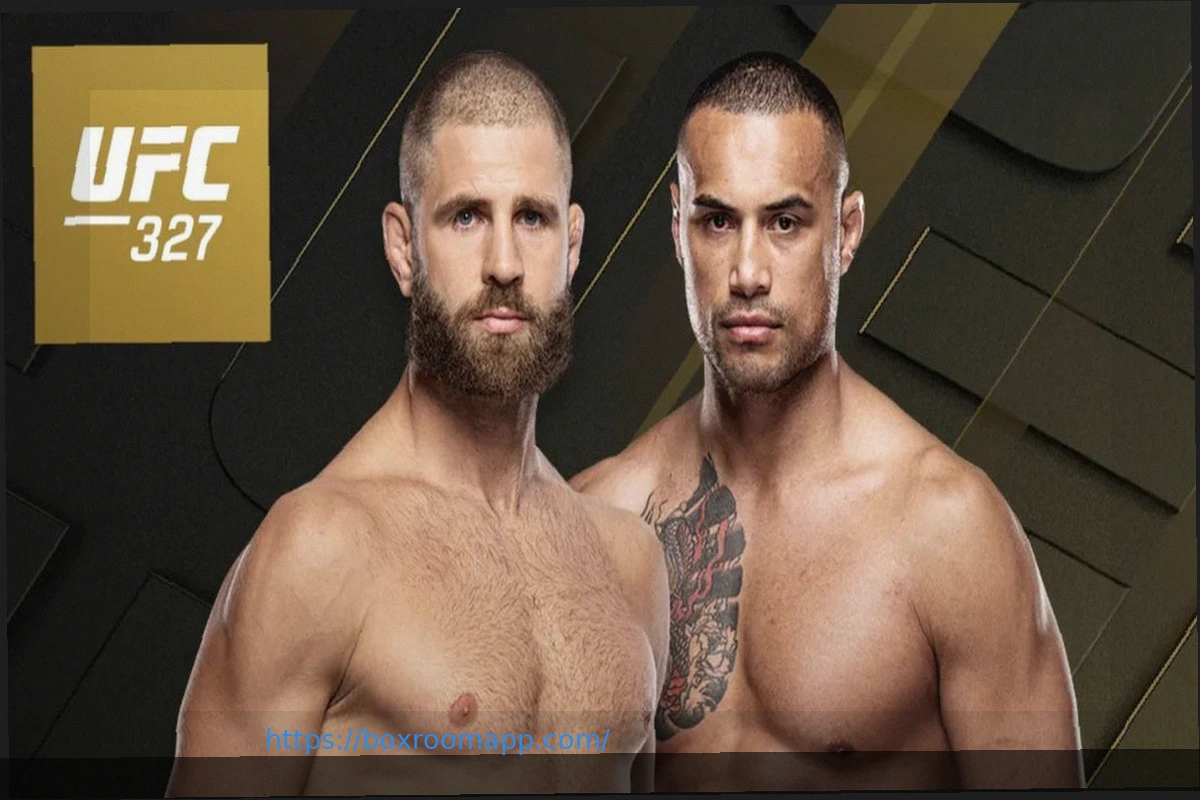
UFC 327 is set to deliver an electrifying night of mixed martial arts on April 11, 2026, at the Kaseya Center in Miami, with the main card commencing at 9 PM local time. Although originally conceptualized as an event featuring two championship bouts, this plan shifted following the postponement of the Joshua Van vs. Tatsuro Taira fight to UFC 328. Despite this alteration, the lineup remains exceptionally strong, albeit with a new, more raw, unpredictable, and volatile character. Undeniably, the vacant light heavyweight title clash between Jiří Procházka and Carlos Ulberg stands prominently as the main event.
This eleventh-hour change significantly influenced the overall atmosphere surrounding the Miami event. Instead of a dual-championship pay-per-view spectacle, UFC 327 now features a singular title fight surrounded by a series of highly charged bouts, each capable of turning dramatically. Azamat Murzakanov vs. Paulo Costa has been elevated to the co-main event, while other notable contests include Curtis Blaydes’ return against Josh Hokit, Dominick Reyes clashing with Johnny Walker, and Cub Swanson’s anticipated final walk to the octagon against Nate Landwehr. Furthermore, the preliminary card offers substantial value for expert predictions, boasting matchups like Patricio “Pitbull” Freire vs. Aaron Pico, which alone gives the undercard a major event feel.
Procházka vs. Ulberg: The Vacant Title Showdown
The main event is far more than just a fight for the vacant light heavyweight championship; it represents a captivating collision of fundamentally different fighting styles. Jiří Procházka’s UFC journey has been marked by his fights rarely reaching a decision, as he thrives in moments that appear chaotic to external observers. Carlos Ulberg enters as a more composed City Kickboxing striker, riding an impressive winning streak that includes significant victories over Jan Błachowicz, Volkan Oezdemir, and Dominick Reyes.
The betting market odds for Procházka vs. Ulberg tell a story of a closely matched contest. Statistical insights suggest Ulberg maintains a slightly higher pace in significant strikes landed per minute, while Procházka benefits from a longer reach. Current betting lines typically place Procházka as a slight favorite (e.g., around 1.81) compared to Ulberg (e.g., around 2.06), indicating that neither fighter is viewed as a runaway favorite.
Fundamentally, Procházka is more dangerous in fractured exchanges, whereas Ulberg is more dependable if the fight adheres to a technical structure. This dynamic creates significant tension around how the initial seven to eight minutes will unfold. Should Ulberg successfully control the distance, forcing Procházka to initiate attacks from further out, he has a clear path to comfortably winning rounds. However, if Procházka can draw him into a chaotic pocket exchange, characterized by wild resets and moments where composure might waver, the fight’s momentum could decisively shift towards the former champion.
The factor of the vacant title further adds to the intrigue. Alex Pereira’s decision to vacate the belt for a move to heavyweight immediately reshaped the division, and this fight now also serves as a crucial determinant of what comes next at 205 pounds. A victory for Procházka would re-establish a familiar champion, instantly opening possibilities for rematches or superfights. Conversely, an Ulberg win would introduce a fresh face from one of MMA’s most formidable camps, potentially leading to a genuine reset for the light heavyweight division rather than a mere repeat of past narratives.
While Procházka is favored, it’s by a narrow margin. The cautious odds provided by analysts reflect the inherent unpredictability of his fighting style. Procházka’s remarkable ability to endure adverse situations and transform them into finishing opportunities remains one of the sport’s most unusual weapons. Ulberg is undoubtedly more polished, but against Procházka, refinement does not always equate to safety. A controlled decision victory for Ulberg is entirely possible, yet the more dramatic and likely conclusion still feels like Procházka will ultimately ignite mayhem.
Murzakanov vs. Costa: Co-Main Event Insights
The elevation of Azamat Murzakanov vs. Paulo Costa to the co-main event offers significant insight into the current state of Paulo Costa’s career. Costa’s placement in a featured light heavyweight slot is one of the most intriguing storylines, though analysts remain skeptical. Betting markets typically show Azamat Murzakanov as the favorite (e.g., around 1.53) over Costa (e.g., around 2.60), clearly indicating that Murzakanov is perceived as the more consistent option.
Murzakanov boasts an undefeated record in the UFC. He is known for his dangerous, compact style and direct approach. Costa, despite being one of the most recognizable names in the weight class, has recently seen his career often feel like a battle between his established reputation and his current form. Costa’s potential is obvious: he is physically imposing, can quickly inject chaos into a fight, and if he finds comfort early, he can build formidable momentum with heavy combinations. The challenge lies in his recent history, marked by too many interruptions, extended breaks, and lingering uncertainty about his peak performance.
This matchup also presents a stylistic dilemma for Costa. Murzakanov is not an opponent who can be easily intimidated by aggressive forward movement; he tends to return significant power when pressured. If Costa cannot successfully bully him, he must then out-execute a fighter who is more compact, more measured, and likely less prone to wasting energy. While not impossible, this strategy carries considerable risk over a three-round contest.
Blaydes vs. Hokit: The Heavyweight Comeback
Curtis Blaydes’ return following a knee injury instantly makes his fight with Josh Hokit more captivating than initial betting odds might suggest. The market typically sets Blaydes as a slight favorite (e.g., around 1.84) against Hokit (e.g., around 2.02), a surprisingly tight spread for a matchup involving a long-standing heavyweight contender. This indicates that analysts are not entirely convinced Blaydes will return as the same version of himself.
At his best, Blaydes remains one of the division’s toughest stylistic challenges. He excels in wrestling, can dictate the pace, and forces heavyweights to endure a type of grueling work they typically despise. However, extended layoffs and knee issues are major drawbacks in the heavyweight division, where even a half-second decrease in speed or reaction time can be brutally exposed. Hokit’s opportunity is clear: he must pressure Blaydes to prove he can still move, recover, and wrestle confidently under duress. If Blaydes answers these questions affirmatively, he likely secures the win.
This bout stands out as one of the better betting angles on the card because its outcome is heavily dependent on which version of Blaydes appears. His reputation suggests a victory, but the uncertainty surrounding his return keeps the fight open. Such scenarios often lead to market hesitation, which is reflected in the close odds.
Reyes vs. Walker: A Dangerous Encounter
The fight between Dominick Reyes and Johnny Walker feels like a high-stakes dare. Reyes is often favored by the market (e.g., around 1.77) over Walker (e.g., around 2.10), with analysts giving Reyes the edge without suggesting it’s a safe bet. Reyes is generally the more secure choice when the fight maintains stability, whereas Walker is adept at transforming a stable fight into a chaotic mess.
Reyes has spent years attempting to regain his footing after a challenging period, while Walker remains unpredictable, always seeming capable of ending the fight with a moment of brilliance or making a significant mistake in the blink of an eye.
This combination typically results in either a highlight-reel finish or a painfully tense fight where neither fighter trusts making the first error. Most likely, it produces the former.
If Reyes can maintain his base and force Walker to reset after every major entry, he should appear to be the superior technician. However, if Walker manages to drag Reyes into a reactive, scrambling fight, the danger level for Reyes will immediately increase. For pure entertainment value, this is one of the main card’s standout fights. For betting comfort, it’s quite the opposite.
Swanson vs. Landwehr: The Farewell Bout
Cub Swanson is widely expected to retire after this fight, imbuing the matchup with significant emotional weight. Multiple reports have indicated this will be his final appearance, and the bout was maintained on the main card even after the title fight reshuffle. Betting markets typically list Swanson (e.g., around 2.00) and Landwehr (e.g., around 1.86) in a near pick’em, with a slight lean towards Landwehr.
Landwehr is a fitting opponent for a retirement fight because he never allows anyone an easy night. He forces his opponents to work intensely and applies relentless pressure. Swanson still possesses the craft to make him miss and the experience to capitalize on overzealous entries, but the crucial question is whether he can maintain that high level of performance for the entire duration of the fight.
Retirement fights often tempt observers into making sentimental picks. Sometimes these predictions prove accurate. More often, however, they obscure the underlying reality: the younger or fresher fighter is tasked with spoiling the moment and usually has no hesitation in doing so. Swanson absolutely possesses the skill to win, but Landwehr’s pressure and willingness to drag the fight into an attrition battle likely make him the slightly safer choice. The emotional angle is undeniably real, but it is not always predictive of the outcome.
Pitbull vs. Pico: A High-Stakes Prelim
The bout between Patricio “Pitbull” Freire and Aaron Pico feels almost too significant for the preliminary card, a factor contributing to UFC 327’s overall unpredictability. Betting markets show Pico as a strong favorite (e.g., around 1.31), with Pitbull as a considerable underdog (e.g., around 3.60). This wide disparity clearly illustrates how analysts perceive the fight: a younger, sharper, and more explosive athlete facing a veteran whose reputation still carries weight but lacks full market confidence.
The gap in odds is understandable, yet it is precisely what makes this matchup so intriguing. Pitbull has already been publicly discussing his future beyond this fight, with reports indicating he’s already setting his sights on former champion Aljamain Sterling after UFC 327. This could signify one of two things: either he is still mentally operating at an elite level and views this as the start of a genuine UFC run, or he is dangerously looking past the immediate challenge in front of him, which is highly perilous against someone as athletic and explosive as Pico.
Pico’s path to victory is clear: fast hands, hard entries, and enough urgency to prevent Pitbull from settling into his preferred pace. Pitbull’s path is narrower but still very real: leveraging his experience, timing, and punishing Pico if he becomes overeager. There has also been external chatter, including from circles of mutual opponents, suggesting that the loser could find themselves in a challenging spot with the promotion. While this might be an exaggeration, it accurately captures the high-pressure environment surrounding this fight. It feels less like an ordinary preliminary bout and more like a crucial test of relevance for both combatants.
A Card Where No Favorite Is Fully Secure
One reason this card is particularly appealing for those interested in betting analysis is that it is replete with fights where even the favored fighter is not considered untouchable. For example, Kevin Holland is often the underdog against Randy Brown (e.g., around 2.11 vs. 1.76), which speaks volumes about how the market views Brown’s consistency. However, Holland has a long track record of quickly turning the tables in his fights.
Tatiana Suarez being favored over Lupita Godinez (e.g., 1.66) appears reasonable, but this price leaves little room for a shaky performance. Kelvin Gastelum’s wider favoritism over Vicente Luque (e.g., 1.45) clearly indicates market confidence in Gastelum’s stability, while Mateusz Gamrot’s odds against Esteban Ribovics (e.g., 1.59) reflect respect for Gamrot’s control-heavy style.
Prior to the recent injury and postponement shuffle, this card appeared to feature two clear championship centerpieces. After the reshuffle, it now more closely resembles a fight night laden with potential gambles and unpredictable outcomes. While this might be frustrating for those who anticipated the original two-title package, it can also create a more engaging card for analysts and fans, precisely because volatility is pervasive.
Final Predictions for UFC 327 in Miami
The clearest prediction for the title fight points to Procházka by a late stoppage, though a competitive decision for either fighter would not come as a surprise. Ulberg possesses the skill to execute a disciplined performance for the initial half of the fight. The fundamental challenge, however, is that Procházka requires only a brief window of opportunity to completely upend a fight, making the slight favoritism shown to him by analysts justifiable.
In the co-main event, Murzakanov’s favored status over Costa is well-deserved (e.g., around 1.53), particularly if one places more trust in consistent form and control than in star power. Reyes over Walker is the technical pick, but this is a fight not to be wagered on with a calm pulse. Blaydes against Hokit represents the classic layoff puzzle. Landwehr appears to be the more practical choice over Swanson, even if many fans wish for a fairy tale ending. Pico is expected to defeat Pitbull due to his superior speed and timing, although those wide odds might tempt anyone who still believes Pitbull has one more elite veteran performance left in him.