NASA's Nancy Grace Roman Space Telescope Launched to Explore the Dark Universe
NASA's Nancy Grace Roman Space Telescope has embarked on a three-month, million-mile journey to its designated orbit, poised to unlock the universe's most profound mysteries. The mission commenced its voyage on Sunday at 7:26 a.m. EDT, propelled by a SpaceX Falcon Heavy rocket from Launch Complex 39A at NASA's Kennedy Space Center in Florida.
The Roman telescope is equipped with a wide field of view and advanced infrared capabilities, enabling it to survey vast regions of space and delve deep into cosmic history. This significant mission will empower astronomers to study dark matter, dark energy, and exoplanets—worlds beyond our solar system. Its comprehensive surveys are expected to support a wide array of scientific research beyond the telescope's primary objectives.
NASA Administrator Jared Isaacman lauded the mission's success, stating, "Roman embodies the success stories we aspire to see across NASA. Delivered ahead of schedule and within budget, this mission is a testament to over a decade of commitment from NASA personnel and our industry partners. Roman will now provide us with a new celestial atlas, expand the frontiers of discovery, and demonstrate the power of bold ambition combined with disciplined execution in America's space program."
The ground control team at NASA's Goddard Space Flight Center in Greenbelt, Maryland, began receiving telemetry data from Roman just seven minutes after its launch. The Falcon Heavy rocket performed flawlessly, separating from the observatory 31 minutes into its flight. The rocket's boosters returned safely to the launch site for future use after detaching from the core stage.
Nicky Fox, associate administrator for the Science Mission Directorate at NASA Headquarters in Washington, commented, "Roman is set to be a discovery engine, bringing us closer than ever to answering humanity's deepest questions about our cosmic origins. With its expansive field of view and rapid survey capabilities, Roman heralds a new era of discovery, making the unseen visible and laying the groundwork for humanity's search for life beyond Earth."
During its launch and early orbital phase, Roman utilizes the Near Space Network's ground stations and relay satellites for tracking, telemetry, and command exchange. Approximately 70 minutes post-launch, the Deep Space Network assumes communication duties, guiding Roman towards the second Sun-Earth Lagrange point (L2), situated roughly one million miles from Earth. Roman will initially connect with the Canberra Deep Space Communication Complex in Australia, later transferring to the Madrid Deep Space Communication Complex in Spain and then to the Goldstone Deep Space Communication Complex in California, ensuring continuous contact throughout its transit.
The Roman team also confirmed the successful deployment of the observatory's solar panels and its lower instrument sunshade about an hour and 23 minutes after launch. In the coming days, Roman's high-gain antenna and its visor-like deployable aperture cover will be deployed. Ground controllers will initiate the first of two mid-course corrections, and the Coronagraph Instrument will be activated. This instrument is designed to demonstrate technology for future missions, such as NASA's Habitable Worlds Observatory concept, which aims to image Earth-like planets in the search for extraterrestrial life. Roman's Coronagraph will take a significant step by capturing images of Jupiter-like planets.
A few weeks into Roman's journey, its primary instrument, the Wide Field Instrument, will become operational. This 300-megapixel infrared camera features 18 4K detectors, each roughly the size of a saltine cracker, which will capture light photons to render sharp cosmic panoramas. The observatory's robust design and stable optical performance will allow it to rapidly scan the sky with minimal downtime between observations, enabling Roman to survey the universe approximately a thousand times faster than NASA's Hubble Space Telescope.
Throughout the remaining three months of Roman's commissioning period, scientists will conduct a series of instrument calibrations and tests. NASA anticipates releasing Roman's initial images by early 2027.
Roman is expected to transmit 1.4 terabytes of data daily, the highest data rate of any NASA astrophysics mission to date. Machine learning, artificial intelligence, and citizen scientists will play a crucial role in analyzing this vast dataset, identifying significant findings for astronomers to investigate.
Julie McEnery, Roman's senior project scientist at NASA Goddard, expressed excitement: "We've never had eyes on the universe quite like Roman's before. It's impossible to predict how much more we will know and have observed by this time next year."
Roman marks the fourth primary mission NASA has launched using a Falcon Heavy rocket. Earlier this year, the agency's Launch Services Program collaborated with SpaceX to expedite the launch date to accommodate the space telescope's early completion.
The telescope's management is based at NASA Goddard, with contributions from NASA's Jet Propulsion Laboratory in Southern California; Caltech/IPAC in Pasadena, California; the Space Telescope Science Institute in Baltimore; and a consortium of scientists from various research institutions. Key industrial partners include BAE Systems Inc., L3Harris Technologies, and Teledyne Scientific & Imaging. The European Space Agency (ESA), the Japan Aerospace Exploration Agency (JAXA), the French space agency CNES, and the Max Planck Institute for Astronomy in Germany have also contributed to the Roman mission.
For more information on the Roman mission, please visit: https://www.nasa.gov/roman
Fresh materials — MMA

NASA Welcomes Jeret Howard as a Civil Servant
Jeret Howard, a logistics management specialist at NASA’s Stennis Space Center, has transitioned from a long-time contractor to a civil servant. This move signifies a continuation of his commitment to national service, mirroring his early dedication as a U.S. Army combat medic at
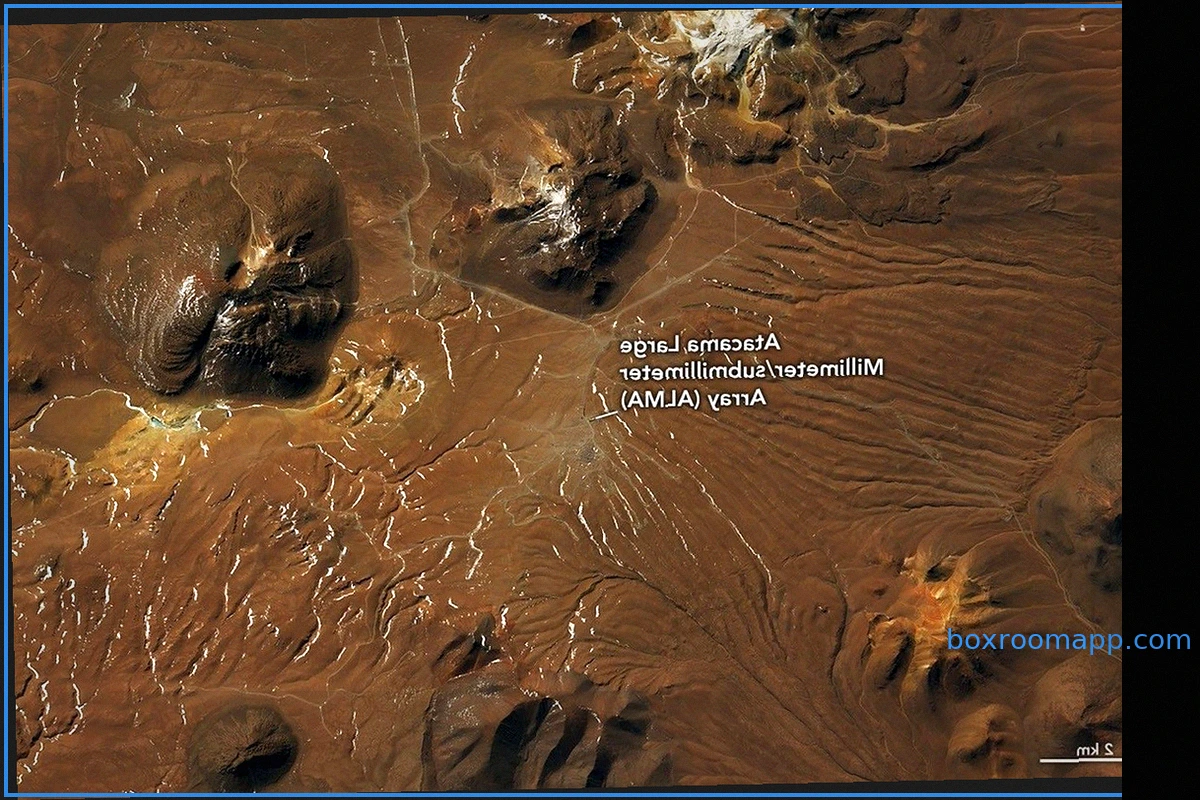
Rare, Widespread Snowfall in the Atacama Desert
In August 2026, consecutive winter storms brought an unusual snow cover to parts of the Atacama Desert in northern Chile. While the region has experienced snowfall before, notably in 2025 and 2011, one of the 2026 events was exceptionally extensive, reaching from the Andes mountains towards th
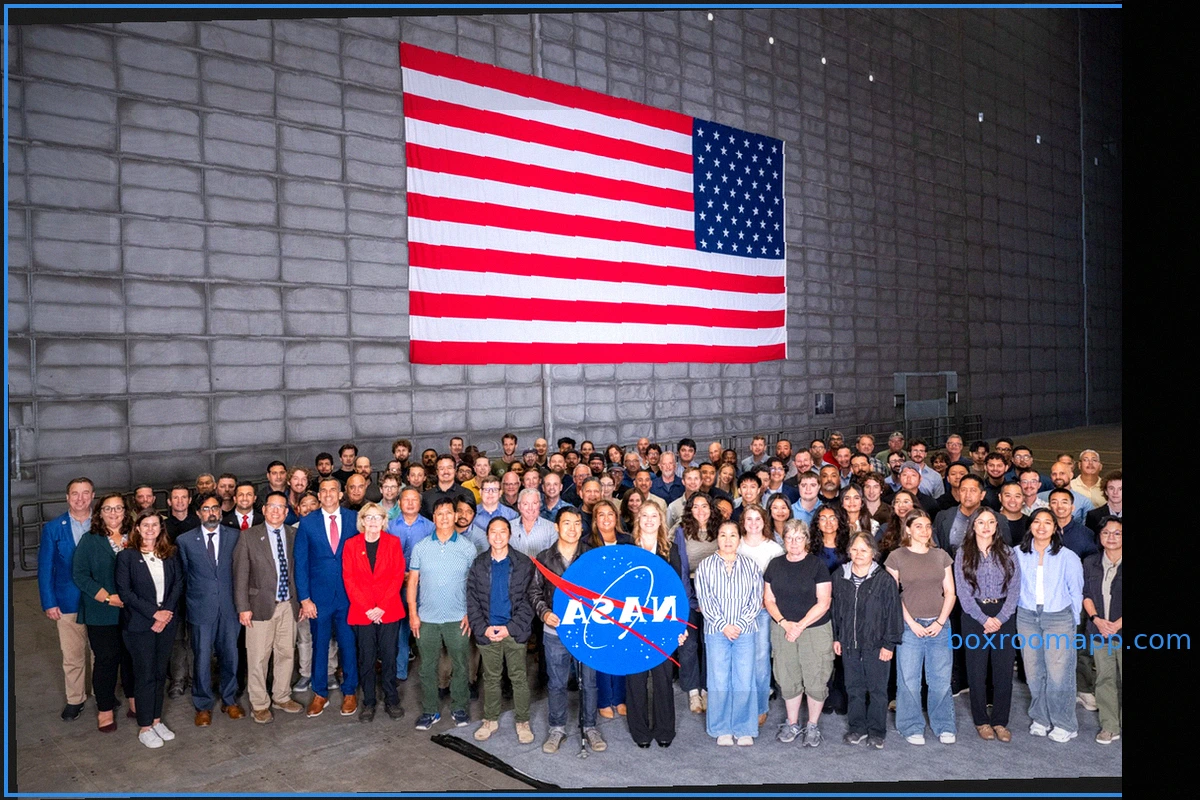
NASA Ames Hosts Largest Civil Servant Swearing-In Ceremony
Brandon Torres Navarrete On August 24, 2026, a significant group of new civil servants and their guests gathered for a
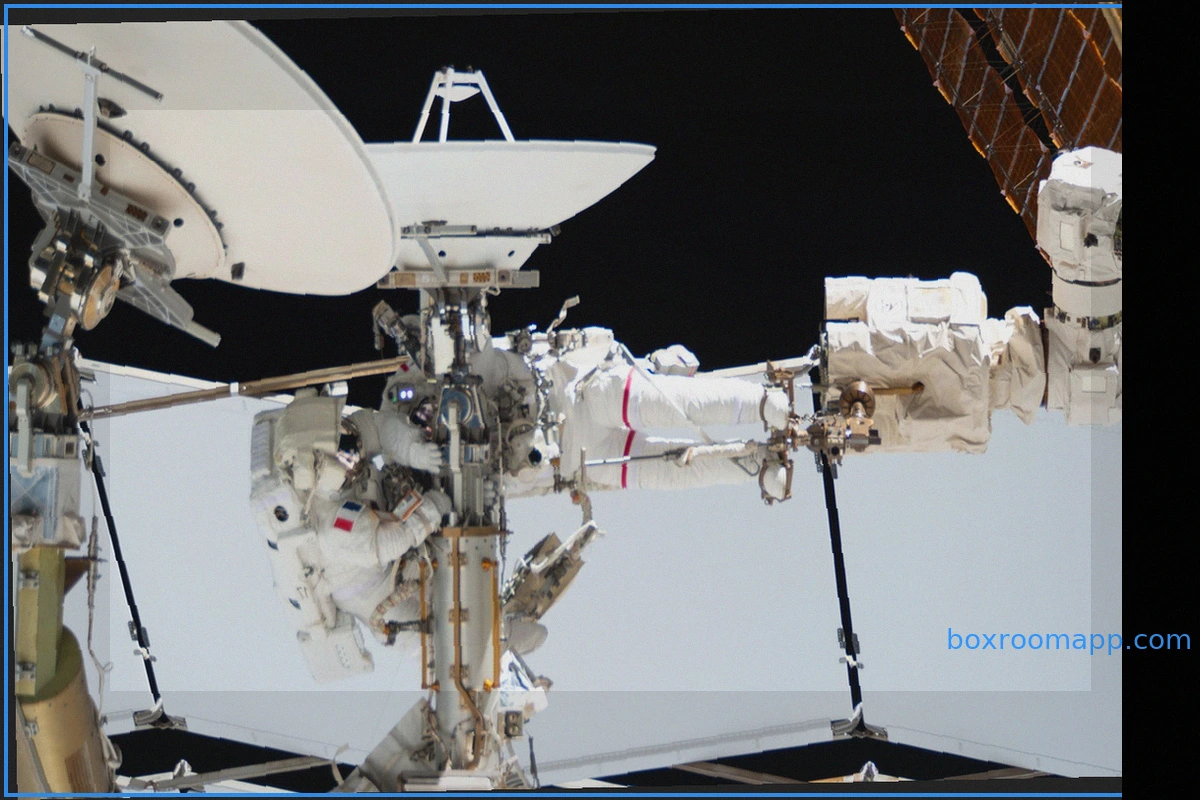
Astronauts Anil Menon and Sophie Adenot on Spacewalk
Astronauts Anil Menon of NASA and Sophie Adenot of the European Space Agency (ESA) participated in a spacewalk on August 18, 2026. The Extravehicular Activity (EVA) lasted six hours and 23 minutes and took place outside the International Space Station (ISS). During this spacewalk, the two f
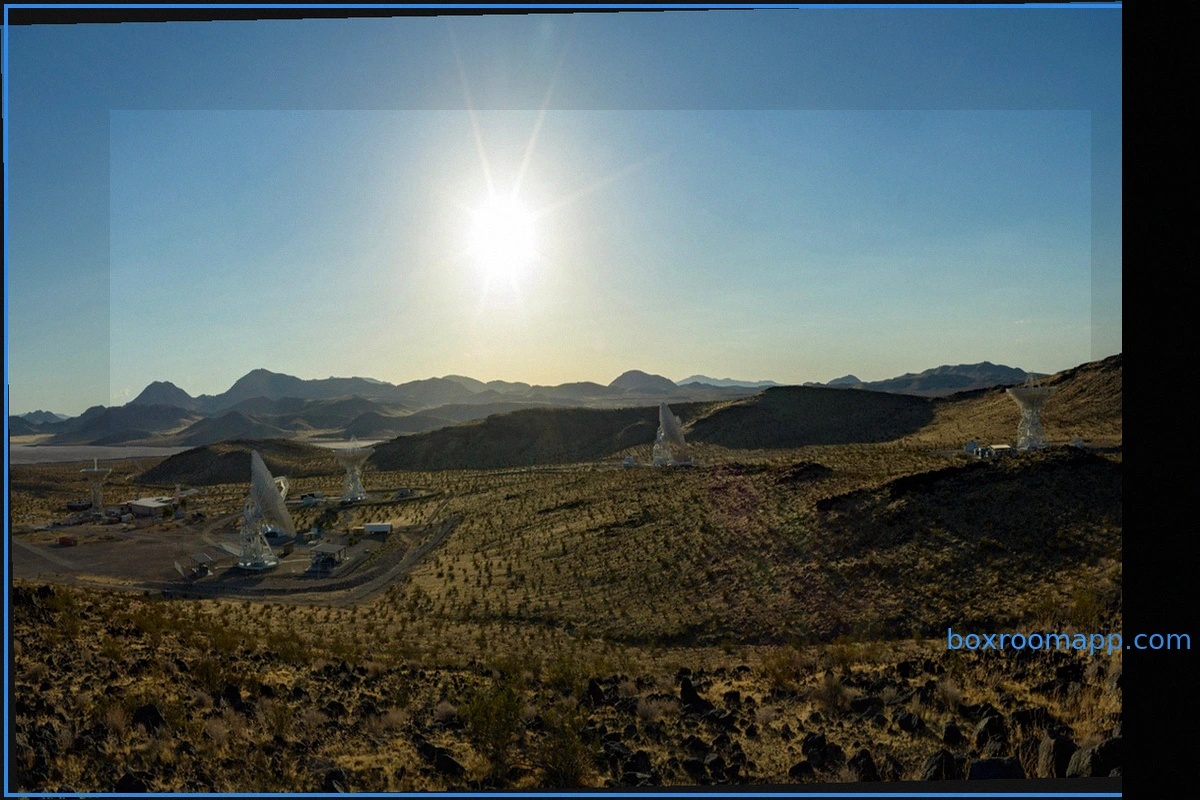
New Next-Gen Dish Strengthens NASA's Deep Space Network
NASA's Deep Space Network (DSN) facility in California has welcomed a significant upgrade with the addition of a new 34-meter (114-foot) radio frequency antenna. This advanced dish is now a vital part of the agency's system for deep space communications and navigation, which utilizes large ant
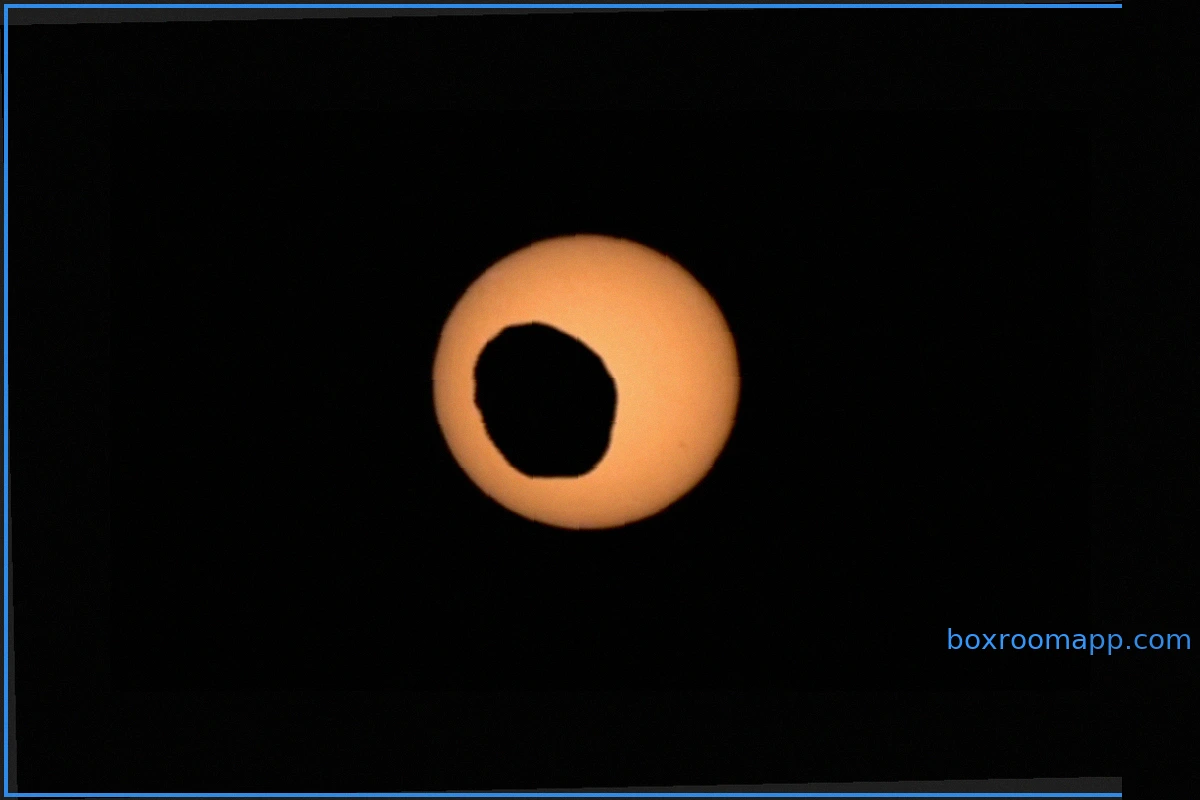
Perseverance Captures Another Phobos Transit
NASA's Perseverance Mars rover successfully captured an image of Phobos, one of Mars' two moons, passing in front of the Sun. This event, known as a transit, was observed on August 12, 2026, which was the 1,948th Martian day (sol) of the mission. The rover utilized its Mastcam-Z camera for thi