

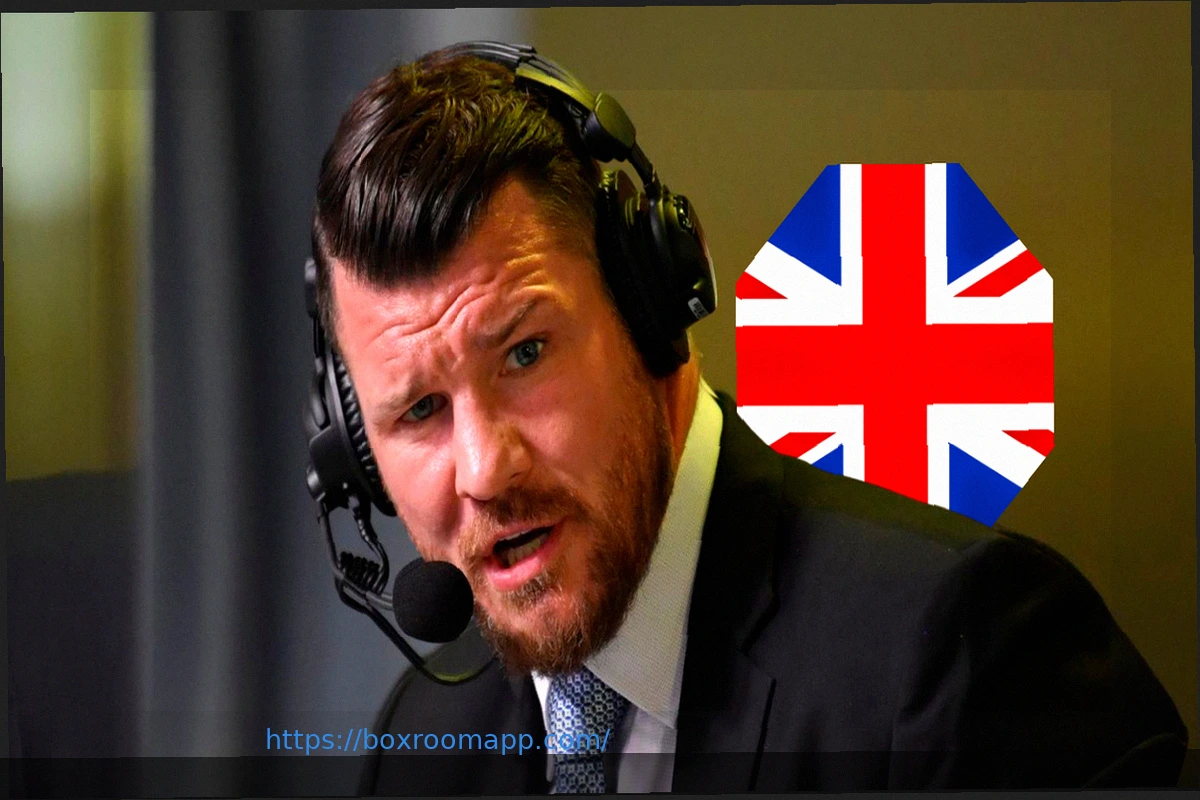
Former UFC middleweight champion Michael Bisping has offered a candid assessment of the current state and future prospects of mixed martial arts in the United Kingdom. While Bisping believes UK MMA is in a robust position, he notes that the sport still struggles to capture a significant slice of the mainstream British audience. This viewpoint aligns with the current landscape: Tom Aspinall has held the UFC heavyweight championship since Jon Jones’ retirement in June 2025, and the UK consistently produces contenders while drawing large crowds for UFC events held on its soil.
Bisping’s evaluation was unequivocal. “Yeah, 100%,” he stated when asked if UK MMA is progressing in the right direction during an exclusive interview. He highlighted Tom Aspinall in the heavyweight division and a consistent stream of talent across various weight classes, adding, “We’ve got some real good viable contenders in multiple divisions… I think UK MMA is in a great place.”
Bisping’s optimism is not rooted in nostalgia. He specifically mentioned Lerone Murphy, who, despite a recent close majority decision loss to Movsar Evloev at UFC London in March 2026 over five rounds, demonstrated significant skill. Bisping’s simple takeaway was that “there’s no shame in that.”
Furthermore, he made a strong prediction regarding flyweight contender Lone’er Kavanagh, stating, “Then obviously we’ve got Lone’er Kavanaugh at flyweight, who I think will be a champion one day without a shadow of a doubt.” Kavanagh has quickly built a strong case for this accolade, entering the UFC rankings and defeating former flyweight champion Brandon Moreno by unanimous decision in a 2026 main event in Mexico City.
What Michael Bisping Believes UK MMA is Lacking
Bisping identified a primary reason for MMA’s slower mainstream growth in Britain, attributing it less to a lack of talent and more to scheduling. “MMA in the UK hasn’t gone fully mainstream due to the majority of the fights happening at around 3 am in the morning,” he explained. He argued that live sports lose a crucial element of their appeal when viewers have to catch up on results the following day. He humorously recalled staying up late to watch quick Anderson Silva knockouts, only to wake up exhausted and question the necessity of his vigil.
“MMA in the UK hasn’t gone fully mainstream due to the majority of the fights happening at around 3 am in the morning. Live sports is one of the most valuable assets in all of television. When you don’t watch a sport live, it doesn’t have that same pizzazz. When I lived in the UK, for the most part, I used to stay up and watch Anderson Silva’s fights. He knocks someone out in 15 seconds and then I’d go to bed exhausted. My wife was like, ‘how was the fight?’ I’m like, ‘why did I stay up for that? He knocked him out in 15 seconds.’
“But if you ever watch it on a Sunday morning, it’s good, it’s enjoyable, but it’s not the same. You can’t get away from it, you click on social media, the results come up or whatever, the algorithm knows what you’re looking for. It’s just hard. I mean, don’t get me wrong, The O2 Arena sells out, and the MEN Arena in Manchester, they always sell out. So, it’s in a good place and it’s always growing, but the reason it hasn’t reached the mainstream level that it has in the US is because it’s an American-based sport.”
Bisping contrasted this with his experience after moving to America in 2011, where he witnessed prelim fights in the mid-afternoon, remarking, “shit, this is like a real sport.” In the UK, this regular viewing habit is uncommon, except for local promotions or the infrequent UFC events held in London or Manchester.
This situation leaves UK MMA in a curious position. It boasts champions, ranked fighters, promising prospects, and a dedicated fan base that attends events. However, it lacks the consistent, easily accessible weekly viewing schedule that typically helps sports penetrate casual households. Bisping’s analysis, therefore, serves less as a marketing pitch and more as a status update: the talent and the audience are present, but the sport’s next significant leap into the mainstream may depend as much on broadcast timing and television accessibility as on the action within the octagon.